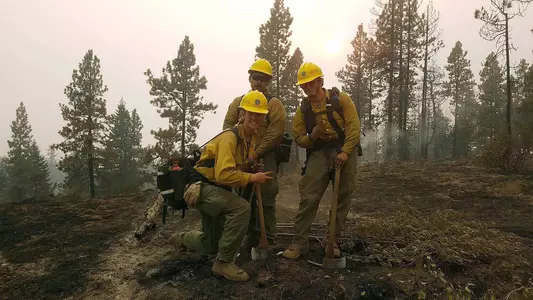
Gillingham: From Rowing Crew To Fire Crew
September 21, 2017 | Women's Rowing
by Kimberlie Haner
Fresh off of a national championship with the Washington women's rowing team, Katy Gillingham did not take the summer off. Rather, she worked harder than she has any summer to fight the fires ravaging the Pacific Northwest. She switched her crew on the lake for a crew in the forest.
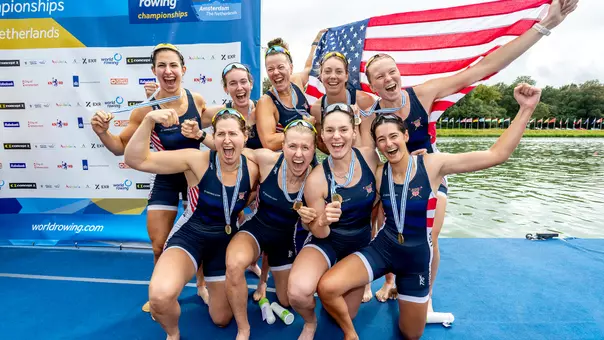
In 2017, Gillingham, a junior from Seattle, and the Husky rowing team dominated the competition. She rowed in the five seat in the first varsity eight, winning the Windermere Cup, the Pac-12 Championship and the NCAA Championship.
Instead of sticking around Seattle to train for next season, she pursued another dream of hers: firefighting.
"It has been my life goal since I was three years old to be a firefighter," Gillingham said. "At that point it seemed like something fun and epic, almost like being a superhero. I want to be the first person on the scene when somebody is having the worst day of their life. I want to be someone that people can count on to save them, their families and their life."
There is a history of firefighting in the Gillingham family. Her great-uncle was a wild land firefighter, and his son is has been fighting the fires down in southern Oregon this summer. Additionally, her cousin and her aunt's sister were firefighters for a couple of summers. Everyone in her family helped her through the application process.
Following her sophomore year at Washington, she applied to be a wild land firefighter. She got a call for an interview, which she drove five hours to attend. She ended up getting hired onto a hand crew after the interviewer passed along her name.
This was uncharted territory for Gillingham. She has worked hard to become part of the best rowing team in the nation, which lends a lot of credibility for those who know the intensity that sport requires. But as for firefighting?
"The closest thing I had to experience in this kind of work is helping my parents around the yard," Gillingham said. "And helping my grandparents clean up fallen trees and branches after windstorms."
On June 12, Gillingham headed into uncharted territory for her. She started at a fire academy where she and the other trainees learned all of the basics for wild land firefighting. Most of the day was split into two parts. The first was doing chores around camp and training.
Practicing the deployment of fire shelters in case of a burn over was one training method that was particularly intense. Gillingham and the other trainees would practice running from fires, opening the fire shelter, getting inside (feet towards the fire always) and staying as close to each other as possible. The fire shelters are a quarter inch thick of aluminum foil-type material. They had to lay in them for about 15 minutes in 90-degree weather.
"When we all came out, we were all completely drenched in sweat," Gillingham said. "But on a fire we usually were anyway."

The second half of the days at the fire academy usually consisted of a training hike with all of their gear, which is about 60 pounds. This is where Gillingham felt her rowing training was the most helpful, especially during the pack test, which is a three-mile walk in under 45 minutes with a 45-pound pack.
"I didn't train at all for it and ended up being the fastest person in my group with a time of 38:32," Gillingham said. "I made it to the top first, and that day I earned the recognition of being one of the top hikers in our crew. I've pushed through a lot of good and bad pain in rowing, and that's exactly what I needed to do this summer to prove myself and to be the best firefighter I could be."
The first of the many fires in the Pacific Northwest this summer began at the end of June. Gillingham spent most of her time near Loomis and around Colville. From her base camp, she was no more than a five-hour drive to the fires. She helped fight a fire near the Mount Rainier National Forest, one in Cle Elum and one north of Bend.
Most days started at 5 a.m. and ended at 10 p.m. back at the incident command post (ICP). The crew averaged about six hours of sleep each night, often sleeping in a field, a school's football field or a wheat field. At the main camp, they slept in a couple of buildings that were repurposed prison camps.
Gillingham and her crew worked on the "initial attack." Part of this process involves cutting trees and underbrush to construct the fire line to give the fire less fuel, lessening the chances of a fire spreading past that point. In addition to the initial attack, the crew also mopped up after the fire died. They went through the area in a line about 5-10 feet apart, looking for smoke or hot spots.
At the end of every day, the crew would conduct a PLOWSS: Plan, Leadership, Obstacles, Weaknesses, Safety and Strengths.
"This is very important for our job," Gillingham said. "We can acknowledge what we have been doing well and also key into what our crew can work on to function at a higher and safer level."
With about a month left until she had to return to Seattle, she sprained her ankle and had to sit out for four days. Despite the injury never fully healing, she continued to work. She was part of a team. Like she learned from rowing, she knew she couldn't let the crew down.
"It never got much better, but that's the name of the game," Gillingham said. "The crew needs you and a little bit of pain wasn't going to stop me from making sure I had those guys' backs."
Throughout the summer, Gillingham worked hard. Not only was she the third youngest, but she was one of three women in the crew and was occasionally underestimated. It was important to her to be able to do the work herself, and she proved herself.
"There were a lot of small things that people would do or say that implied that they were more capable of doing something than I was," Gillingham said. "Strength was never an issue for me. I could get the job done."
Gillingham is now back on campus, training with the rest of her teammates to repeat as national champions. With so many physical challenges, she feels like she can power through pain and discomfort stronger than before. Additionally, she has new skills to help the team mentally this season.
"Something I can take from this experience is conflict resolution," Gillingham said. "When you spend so much time with the same people, sometimes people start getting on each other's nerves and we have to deal with temper flare ups."
Being able to be both a rower and a fire fighter is a dream come true for Gillingham. There is one thing that makes both experiences enriching for her: the relationships. Her teammates in her boat and the people in her crew have become integral parts of her life.
"Even over such a short span of time, I met lifelong friends," Gillingham said. "I got to spend the entire three months of my summer camping in the forest with some of the coolest people I know."

Fresh off of a national championship with the Washington women's rowing team, Katy Gillingham did not take the summer off. Rather, she worked harder than she has any summer to fight the fires ravaging the Pacific Northwest. She switched her crew on the lake for a crew in the forest.
In 2017, Gillingham, a junior from Seattle, and the Husky rowing team dominated the competition. She rowed in the five seat in the first varsity eight, winning the Windermere Cup, the Pac-12 Championship and the NCAA Championship.
Instead of sticking around Seattle to train for next season, she pursued another dream of hers: firefighting.
"It has been my life goal since I was three years old to be a firefighter," Gillingham said. "At that point it seemed like something fun and epic, almost like being a superhero. I want to be the first person on the scene when somebody is having the worst day of their life. I want to be someone that people can count on to save them, their families and their life."
There is a history of firefighting in the Gillingham family. Her great-uncle was a wild land firefighter, and his son is has been fighting the fires down in southern Oregon this summer. Additionally, her cousin and her aunt's sister were firefighters for a couple of summers. Everyone in her family helped her through the application process.
Following her sophomore year at Washington, she applied to be a wild land firefighter. She got a call for an interview, which she drove five hours to attend. She ended up getting hired onto a hand crew after the interviewer passed along her name.
This was uncharted territory for Gillingham. She has worked hard to become part of the best rowing team in the nation, which lends a lot of credibility for those who know the intensity that sport requires. But as for firefighting?
"The closest thing I had to experience in this kind of work is helping my parents around the yard," Gillingham said. "And helping my grandparents clean up fallen trees and branches after windstorms."
On June 12, Gillingham headed into uncharted territory for her. She started at a fire academy where she and the other trainees learned all of the basics for wild land firefighting. Most of the day was split into two parts. The first was doing chores around camp and training.
Practicing the deployment of fire shelters in case of a burn over was one training method that was particularly intense. Gillingham and the other trainees would practice running from fires, opening the fire shelter, getting inside (feet towards the fire always) and staying as close to each other as possible. The fire shelters are a quarter inch thick of aluminum foil-type material. They had to lay in them for about 15 minutes in 90-degree weather.
"When we all came out, we were all completely drenched in sweat," Gillingham said. "But on a fire we usually were anyway."
The second half of the days at the fire academy usually consisted of a training hike with all of their gear, which is about 60 pounds. This is where Gillingham felt her rowing training was the most helpful, especially during the pack test, which is a three-mile walk in under 45 minutes with a 45-pound pack.
"I didn't train at all for it and ended up being the fastest person in my group with a time of 38:32," Gillingham said. "I made it to the top first, and that day I earned the recognition of being one of the top hikers in our crew. I've pushed through a lot of good and bad pain in rowing, and that's exactly what I needed to do this summer to prove myself and to be the best firefighter I could be."
The first of the many fires in the Pacific Northwest this summer began at the end of June. Gillingham spent most of her time near Loomis and around Colville. From her base camp, she was no more than a five-hour drive to the fires. She helped fight a fire near the Mount Rainier National Forest, one in Cle Elum and one north of Bend.
Most days started at 5 a.m. and ended at 10 p.m. back at the incident command post (ICP). The crew averaged about six hours of sleep each night, often sleeping in a field, a school's football field or a wheat field. At the main camp, they slept in a couple of buildings that were repurposed prison camps.
Gillingham and her crew worked on the "initial attack." Part of this process involves cutting trees and underbrush to construct the fire line to give the fire less fuel, lessening the chances of a fire spreading past that point. In addition to the initial attack, the crew also mopped up after the fire died. They went through the area in a line about 5-10 feet apart, looking for smoke or hot spots.
At the end of every day, the crew would conduct a PLOWSS: Plan, Leadership, Obstacles, Weaknesses, Safety and Strengths.
"This is very important for our job," Gillingham said. "We can acknowledge what we have been doing well and also key into what our crew can work on to function at a higher and safer level."
With about a month left until she had to return to Seattle, she sprained her ankle and had to sit out for four days. Despite the injury never fully healing, she continued to work. She was part of a team. Like she learned from rowing, she knew she couldn't let the crew down.
"It never got much better, but that's the name of the game," Gillingham said. "The crew needs you and a little bit of pain wasn't going to stop me from making sure I had those guys' backs."
Throughout the summer, Gillingham worked hard. Not only was she the third youngest, but she was one of three women in the crew and was occasionally underestimated. It was important to her to be able to do the work herself, and she proved herself.
"There were a lot of small things that people would do or say that implied that they were more capable of doing something than I was," Gillingham said. "Strength was never an issue for me. I could get the job done."
Gillingham is now back on campus, training with the rest of her teammates to repeat as national champions. With so many physical challenges, she feels like she can power through pain and discomfort stronger than before. Additionally, she has new skills to help the team mentally this season.
"Something I can take from this experience is conflict resolution," Gillingham said. "When you spend so much time with the same people, sometimes people start getting on each other's nerves and we have to deal with temper flare ups."
Being able to be both a rower and a fire fighter is a dream come true for Gillingham. There is one thing that makes both experiences enriching for her: the relationships. Her teammates in her boat and the people in her crew have become integral parts of her life.
"Even over such a short span of time, I met lifelong friends," Gillingham said. "I got to spend the entire three months of my summer camping in the forest with some of the coolest people I know."

Players Mentioned

/ Women's Rowing
Tuesday, August 11
Thursday, July 16
Wednesday, July 08
Wednesday, July 08