
Montlake Memories: The 1980s
Husky Stadium Centennial Celebration
Jeff Bechthold
11/4/2020

With 2020 marking the 100th anniversary of the first football game at what is now called Alaska Airlines Field at Husky Stadium, GoHuskies.com is marking the milestone with a decade-by-decade look back at some of the big events that have taken place –football games and otherwise – at the Greatest Setting in College Football.
November 14, 1981 – Washington 13, USC 3
While any classic stereotype of Seattle and the Pacific Northwest will undoubtedly include a reference to rain, Husky football home games that have been greatly affected by bad weather are still rather rare.
One such game, however, was the Huskies' battle with USC in 1981, when a storm whipped the city and made offensive football extremely difficult.
The Huskies, in the seventh season of Coach Don James' tenure, had established themselves atop the conference, having won the title in 1980 with a 9-2 regular-season record. In 1981, the UW was off to a good start, 7-1 and ranked No. 16 in the nation before suffering a devastating, 31-0 loss at UCLA in week nine.
The loss dropped the Huskies from the rankings. Meanwhile, USC, under head coach John Robinson, was 8-1 and ranked No. 3 in the nation, thanks in large part to Marcus Allen, who rushed for 2,342 yards and won the Heisman Trophy that season.
Allen, who had already banked seven 200-yard performances that season, arrived in Seattle just 32 yards shy of 2,000 for the season. The Seattle papers called for "showers" and predicted an overflow crowd of around 60,000 for the game.
The weather forecast fell short of reality as a storm rolled in that shut down the Evergreen Point Floating Bridge (Hwy. 520) for 11 hours. In Bremerton, an aircraft carrier broke its moorings and slammed into a destroyer. Trees fell all over the region and an estimated 400,000 homes along the I-5 corridor lost power. The National Weather Service called it the biggest windstorm in Seattle since 1962.
At Husky Stadium, the weather surely put a damper on both teams' ability to move the ball. Washington managed a paltry 120 yards of total offense, while USC amassed just 182. The Trojans were held without a touchdown for the first time since 1967 as the Huskies won, 13-3, knocking the Trojans from Rose Bowl contention while simultaneously putting themselves back in the thick of it.
Both teams kicked field goals in the second quarter to make a 3-3 game at half. After a scoreless third quarter, Husky Chuck Nelson made a 46-yarder to give the Huskies their first lead with just 2:19 left in the game. USC would have one more chance to move the ball and either tie or win the game.
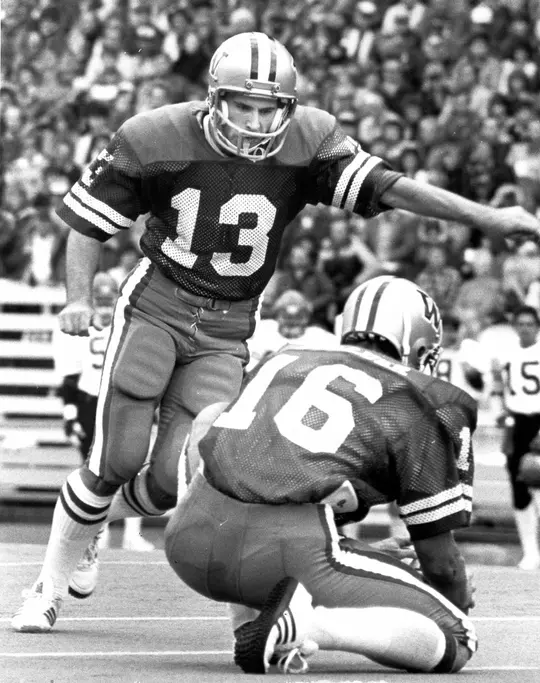
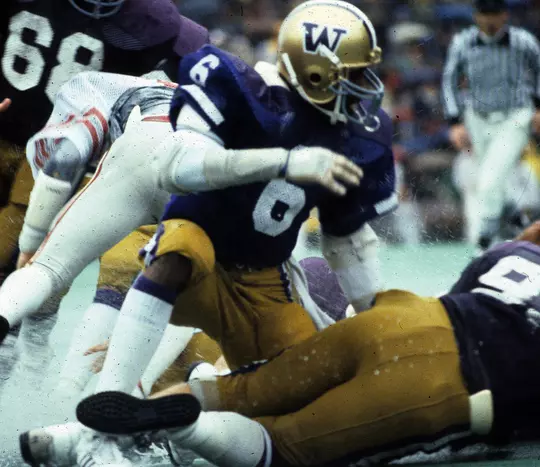
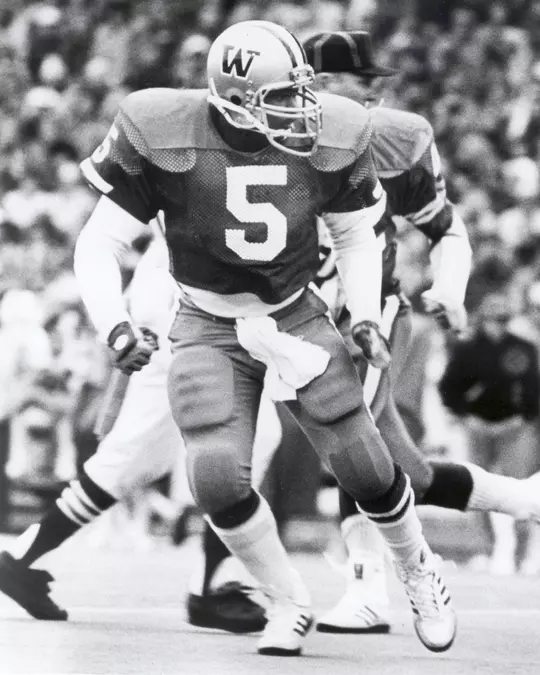
That is, until Nelson's kickoff. Kicking towards the closed, west end, Nelson booted the ball to the north sideline, where it bounced at about the 15-yard line, over the head of USC return man Fred Crutcher and into the Trojans' end zone.
As players from both teams scrambled for the live ball, Husky linebacker Vince Albritton hit Crutcher just before he was able to land on it, allowing Fred Small, a freshman linebacker from Los Angeles, to cover it for the touchdown.
The fans in the stands erupted as the Huskies on the field swarmed Small, who held the ball overhead, bounding his way back to the Husky sideline. The game was won. And, after beating Washington State the following Saturday at Husky Stadium, Washington went back to the Rose Bowl. On Jan. 1, 1982, the Dawgs blanked Iowa, 28-0, in front of 105,611 fans.
Marcus Allen was held to "just" 155 yards, easily moving his season total past 2,000. "What I did doesn't mean that much right now," he said, as quoted in the Seattle Post-Intelligencer. "I'm not really thinking about 2,000 yards. All I'm thinking about is that we didn't win the game."
"It was just fun beatin' SC and beatin' them two years in a row," UW defensive tackle Fletcher Jenkins was quoted in the same write-up. "We still got an awful lot of respect for them. We knew Marcus would get his yards."
In George N. Meyers' column in the following morning's Seattle Times, Small described his play: "I saw the scuffling there and I went into the end zone with my eyes wide open. It was like a dream."
That same column wrapped up with this: "'I told Fred I was going to give him the game ball and a big kiss,' said Don James. Small grinned, largely. 'He did,' he said."
Allen, of course, went on to win the Heisman Trophy, ahead of Herschel Walker, Jim McMahon and Dan Marino. He was the 10th pick of the 1982 NFL Draft and spent 16 years in the league, mostly with the Raiders, winning the 1985 NFL MVP and six Pro Bowl invitations.
Small finished his career as a Husky with a win in the 1985 Orange Bowl over Oklahoma. Drafted by the Steelers in the ninth round of the NFL Draft, he played in all 16 games as a rookie, but only that one season.
After football, Small entered law enforcement and eventually became a motorcycle officer for the Inglewood, Calif., police department. In June, 2003, he was the victim of an automobile accident on his motorcycle while driving on the Pomona Freeway, and lost his life at the age of 39. He was survived by his wife and four children.
November 13, 1982 – Washington 17, Arizona State 13 ... in Tempe, Arizona
Naturally, most of the memories in our series of stories on the 100th anniversary of the opening of Husky Stadium center around games and events held in Seattle. That makes sense.
But here's one about a game that took place about 1,400 miles southeast in Tempe, Ariz., on Nov. 13, 1982.
A year before, in 1981, Washington had edged Arizona State in the race for the Pac-10 title. In those days, remarkably, teams didn't play balanced conference schedules, so the Huskies' 6-2 league record was good enough to beat out 5-2 ASU, despite the Sun Devils having handled the Huskies, 26-6, in Seattle.
The following season, ASU had another good team. The Devils prepared to take on Washington with a perfect 9-0 record, earning them the No. 3 spot in the Associated Press top 20 that week. The Huskies were also very good, a loss at Stanford the only bad mark on their 8-1 record and No. 7 ranking.
A number of factors were at work in the buildup to the game. There was what had quickly become a heated rivalry between the two relatively new conference foes (ASU joined the league in 1978). Also, ASU was on NCAA probation, which meant none of the Devils' games could air on network television. Most of all, the chatter from ASU coaches and players was at a level you almost never see anymore. The Seattle newspapers were feasting on the material being provided by the boastful Devils.
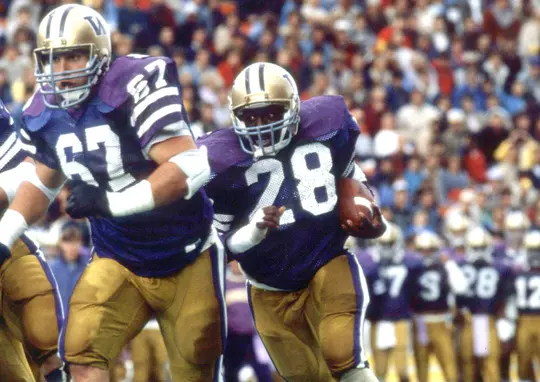
"There is no way that Washington wants this game more than we do," ASU d-line coach Don Underwood was quoted by the Seattle Post-Intelligencer's Steve Rudman. "All other things being equal – and they might be equal – I think we're going to win because we want this game more. In a good game like this one, the winner is the team that wants it the most. And that's us."
That quote was mild in comparison to some others. Rudman quoted another ASU assistant on UW receivers Paul Skansi and Aaron Williams: "We've faced good receivers before, so we aren't too worried."
In Friday's paper, Rudman wrote about ASU's punter, Mike Black, who having served as the Devils' scout team quarterback, emulating Husky QB Tim Cowan, had one word of advice to Cowan having to face the rugged Devils defense: "Pray."
Another P-I story, from Jack Smith, included the following paragraph, noting that around Tempe, they were already selling Rose Bowl merchandise.
"The response is often garrulous: 'Where you goin' to move Monday if you don't beat them damn Huskies?' a drunk alum asked an assistant coach at a bibulous midweek boosters' gathering. On the ASU campus, coeds in designer Levis with the obligatory long blonde hair serenaded live television cameras with 'Everything's Comin' Up Roses,' and Rose Bowl T-shirts are outselling the ones that show a Devil committing violent and unnatural acts upon a cringing Husky."
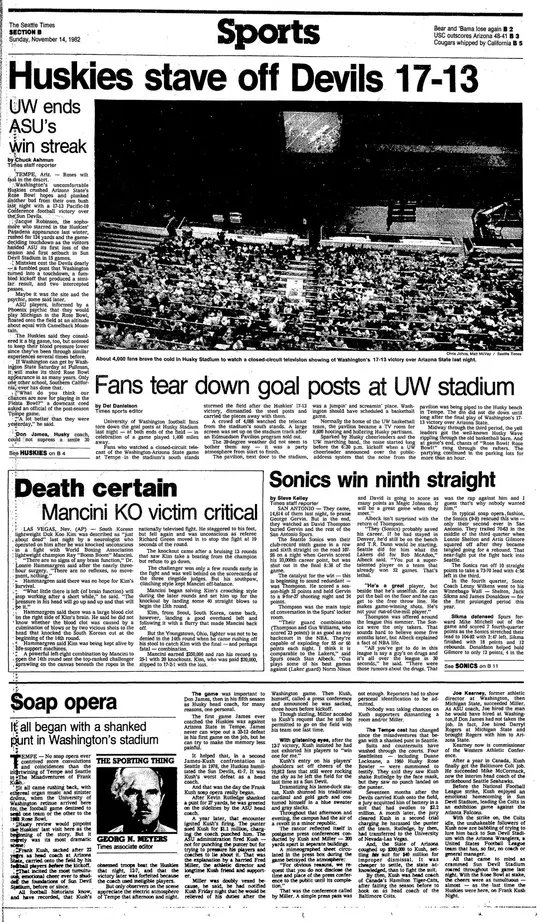
Rudman even wrote a story about a Phoenix-based psychic, who guaranteed an ASU win. "Clarisa Bernhardt, a renowned psychic who has predicted earthquakes, assassination attempts and national elections with a 90-percent accuracy rate, has tapped her subconscious mind again and come up with yet another calamity," Rudman wrote.
"Yesterday afternoon," the story continued, "Bernhardt reiterated her earlier prediction – saying that the Washington Huskies will lose to Arizona State tonight and the Sun Devils will play in the Rose Bowl game on New Year's Day. 'ASU will beat Washington,' Bernhardt said emphatically. 'ASU will play in the Rose Bowl.'"
Because ASU's games couldn't be shown on TV, the UW put together a closed-circuit broadcast for fans in Seattle. Tickets to watch the game in Hec Edmundson Pavilion went on sale that Monday – $8 each, $5 for UW students and senior citizens. Those seats sold out, so the UW athletic department added a second venue where fans could gather to watch the closed-circuit broadcast: Husky Stadium.
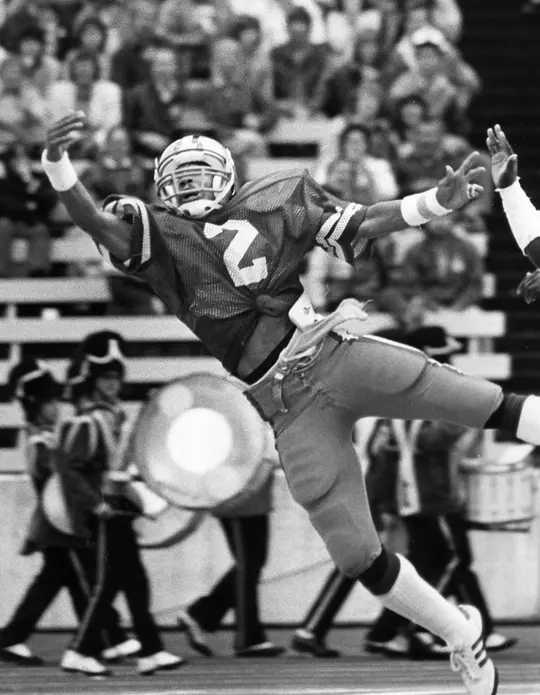
With Dawg fans watching in Seattle, and with 72,021 fans in attendance – the largest crowd ever to witness a sporting event in the state of Arizona at the time – Washington pulled off the upset, beating the Sun Devils, 17-13 – the UW's second straight win over a top-10 team, as the Dawgs beat UCLA, 10-7 a week earlier in Seattle.
After a scoreless opening quarter, Washington got on the board when Cowan hit Williams with a 20-yard TD pass. The UW's Chuck Nelson and ASU's Luis Zendejas (who would both eventually earn All-America and go on to NFL success) traded field goals, giving Washington a 10-3 lead at the half. Nelson's kick was his 23rd made field goal of the season (and his 27th straight, dating back to the previous season), tying the NCAA record for single-season field goals.
On the opening kick of the third quarter, Husky Vince Albritton recovered a Darryl Clack fumble at the ASU 25 and, four plays later, Jacque Robinson scored on a four-yard run, increasing the lead to 17-3. Clack scored on a 50-yard run later in the third, and Zendejas kicked a field goal in the fourth, but UW used a lengthy possession to run time off the clock and then held the Devils on downs on their final drive to grind out the win. Robinson was the UW star, rushing for 124 yards on 34 carries. UW's Dean Browning, who had eight tackles and two sacks, earned Pac-10 Defensive Player of the Week afterwards.
Back in Seattle, a jubilant crowd at Husky Stadium decided to celebrate.
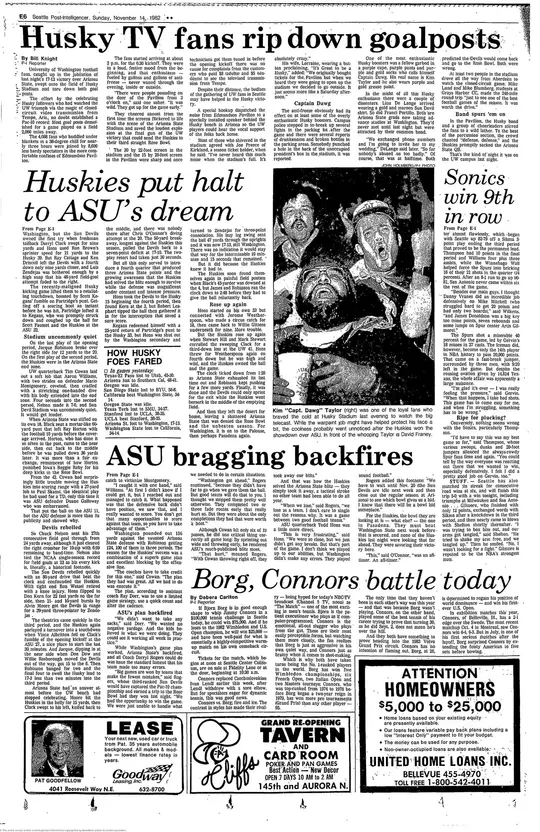
The Seattle P-I's Bill Knight described it thusly: "University of Washington football fans, caught up in the jubilation of last night's 17-13 victory over Arizona state, swept onto the field of Husky Stadium and tore down both goal posts. The effort by the celebrating Husky followers who had watched the UW triumph via the magic of closed-circuit video transmission from Tempe, Ariz., no doubt established a Pac-10 record: Most goal posts demolished for a game played on a field 2,000 miles away."
The Huskies reveled in their win. "They talked too much," UW linebacker Mark Stewart told the P-I's Rudman. "All week they talked about how they were going to beat us. They should have shut up and not said anything."
In the same story, Robinson added, "They kept saying they were going to shut us down. They said some bad things about us. They shouldn't have done that."
Husky fans in Tempe, who probably should have taken a lesson, threw roses at UW coach Don James after the win. Both the Huskies and the Sun Devils lost their rivalry games the following week, the Huskies at WSU and the Devils in Tucson vs. Arizona.
ASU would go on to the Fiesta Bowl, a 32-21 win over Oklahoma. Washington beat Boomer Esiason and Maryland, 21-20, in the Aloha Bowl. UCLA won the Pac-10 title and beat Michigan in the 1983 Rose Bowl.
Nelson, the Husky placekicker who tied a record in the ASU game, still holds numerous UW records and was a unanimous 1982 All-America selection, as well as a two-time first-team Academic All-America honoree. He played five years in the NFL and is currently the president and CEO of the Washington Athletic Club in downtown Seattle.
Robinson, who was the MVP of both the Rose Bowl (his freshman season) and the Orange Bowl (as a senior), was drafted by the Buffalo Bills and played briefly in the NFL for the Eagles. He is, of course, the father of former UW football and basketball star Nate Robinson, three-time NBA Slam Dunk Contest champion.
September 17, 1983 – Washington 25, Michigan 24
Whenever a list of great, non-conference victories at Husky Stadium is written, it always includes the 1983 UW victory over Michigan. Husky fans live for the big non-conference game against a fellow traditional power, and when those kind of games go down to the wire and the Dawgs come out on top, it's a special occasion.
The game was the second of the season, with the Huskies ranked No. 16 by the AP and the Wolverines sitting at No. 8. The UW had opened the season with a 34-0 win at Northwestern the week before, while Michigan had debuted with a 17-10 win over Washington State in Ann Arbor.
Much of the pregame coverage centered around the two head coaches, UW's Don James and Michigan's Bo Schembechler, with each of them paying compliments to the other. They had both been raised in the same stretch of Ohio between Akron and Canton. Schembechler had played at Miami of Ohio and James at Miami of Florida. They'd both gotten their first head coaching job at programs in the state: James at Kent State and Schembechler at his alma mater.
They also met twice in the Rose Bowl game, where each team had earned one win and suffered one loss.
On Saturday, the Huskies took a 10-3 lead by halftime, but in the second half, Michigan scored three touchdowns, including one on a fumble recovered in the end zone early in the fourth, to move in front 24-10.
Washington got back on the scoreboard with about nine minutes left as a three-yard run from Walt Hunt capped a 75-yard drive. And for those paying attention, it was clear that UW quarterback Steve Pelluer, a senior from Interlake High in Bellevue, was starting to get on a roll, as he completed six in a row on that drive.
Michigan had a chance to put the game away. The Wolverines marched nearly the length of the field, eating up more than five minutes of game clock, but missed a 32-yard field goal. Pelluer and the Huskies got the ball back on their own 20 with 3:40 on the clock.
The Huskies were methodical as Pelluer completed eight straight on the drive, the last one of them a seven-yard touchdown pass to Mark Pattinson. That TD cut the lead to 24-23. In a game played more than a decade before overtime had been introduced to college football, the Huskies had a choice: kick for the tie, or go for two points and the win. By all accounts, the decision was quick and unanimous: Washington would go for it.
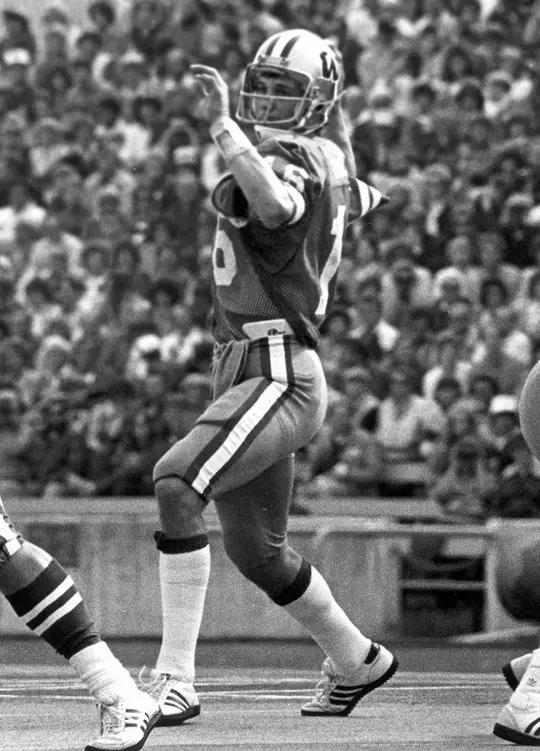
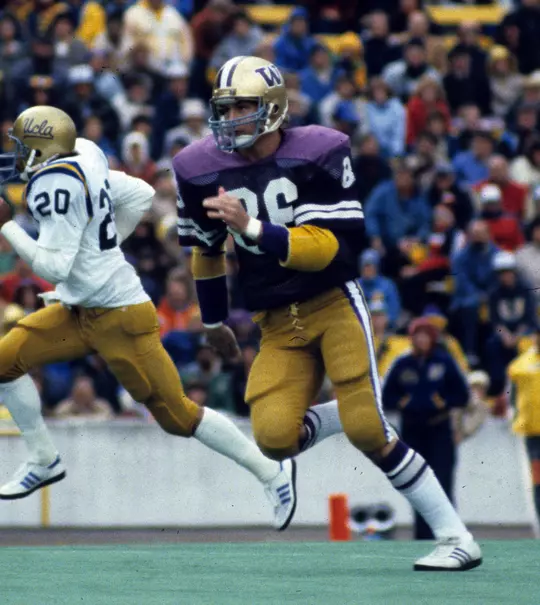
"The fifth-largest crowed in Husky Stadium history rocked with approval as Don James and the Washington Huskies spit in the eye of a tie yesterday," Blaine Newnham wrote in the Sunday Seattle Times, "opting instead for Steve Pelluer's two-point conversion toss to Larry Michael and a breathtaking 25-24 win over Michigan."
Newnham's story also included this bit of explanation from Coach James on the quick decision: "I asked the assistant coaches on Thursday what they'd do in that situation, and they said go for two. That's our philosophy. Against a non-conference team you go for the win; against a conference team, if you're still in the race you go for the tie."
On the two-point play, Pelluer sensed a blitz coming and shot a quick pass to a crossing Larry Michael, the Husky tight end from East Wenatchee, Wash.
Pelluer had finished the day with 14 straight completions – 15, counting the conversion – and was 27-for-33 for 269 yards overall. Steve Smith, the Michigan QB, passed for 225 and rushed for 50, but it wasn't quite enough.
In Dick Kunkle's recap in the following morning's Tacoma News Tribune, Michael said of the winning pass, "It was a nice throw. All it had to do was clear the defender's fingers. I just said to myself, 'Catch that sucker!'"
Pattison, who caught the TD said, "It's like a dream come true. Everything was happening so quickly out there I hardly had time to think. I heard one of the linemen yell 'check off' to me. Before I knew it, the crowd was going nuts and I had the ball."
"Steve threw a perfect ball," Pattison continued. "I've been questioning my ability, but this gives me an extra boost. It has to be my biggest catch as a Husky."
Washington finished the season second in the conference standings and accepted a berth to face Penn State in the Aloha Bowl, falling to the Nittany Lions, 13-10. Many of the top players on that 1983 team were back for the 1984 season, when Washington beat Oklahoma in the Orange Bowl and fell just short of the national championship.
Pelluer, named the Pac-10 Offensive Player of the Year at the end of that season, was selected in the fifth round of the 1984 NFL Draft and played eight seasons in the NFL, for the Cowboys and Chiefs. His brother, Scott, played at Washington State and the New Orleans Saints and was an assistant coach at the UW under both Jim Lambright and Keith Gilbertson.
Steve's son, Zeke, is currently a redshirt freshman tight end for the Huskies.
February 25, 1987 – The Collapse
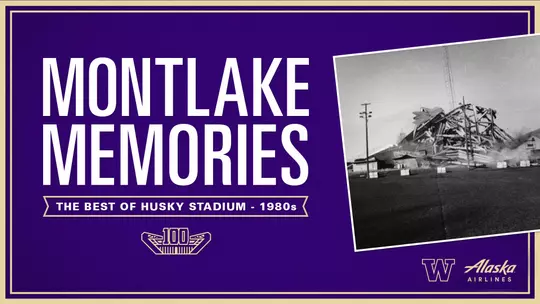
On February 25, 1987, disaster struck the construction project that would add a second, north upper deck to Husky Stadium, a structure that would mirror the south deck and provide the iconic silhouette all Seattleites have come to know since. It could have been much worse.
That day, with two of the nine sections that would eventually make the new stands having been erected, the steel came crashing to the ground. Amazingly, no one was injured.
''People on the site recognized before the fact that there were problems with the stability of the structure,'' Fire Battalion Chief Gerald Jones told the Seattle Post-Intelligencer. ''They removed all the working personnel from the area, so there weren't any victims. I think it was really a heads-up move.''
Later in the same story:
"Construction worker Dave Graden was hanging in a bucket from the hook of a crane, just moments away from stepping onto the metal frame to make measurements for guy wires to help secure the structure.
"'We were up in the box on the hook just above the iron,' he said. 'We were about to get on it. It started to creak and groan. We were about six feet above it. We just stood right above it and watched it go."
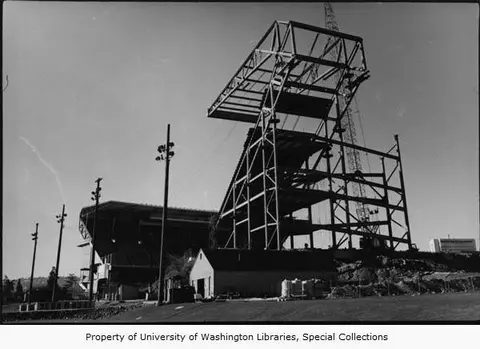
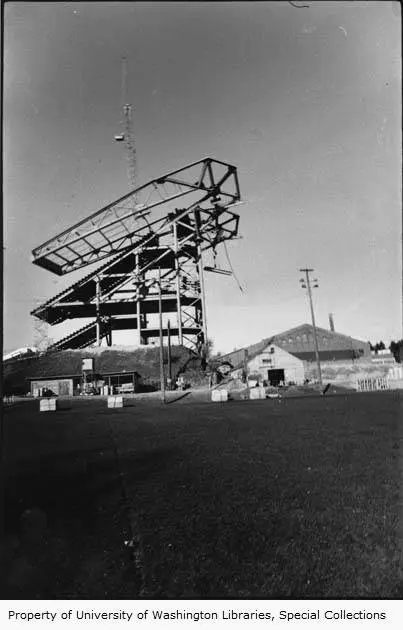
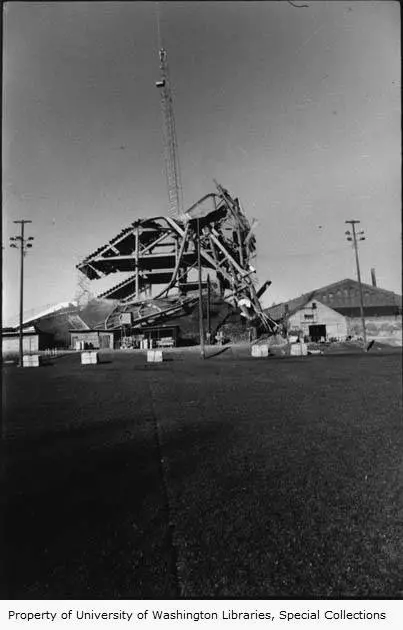
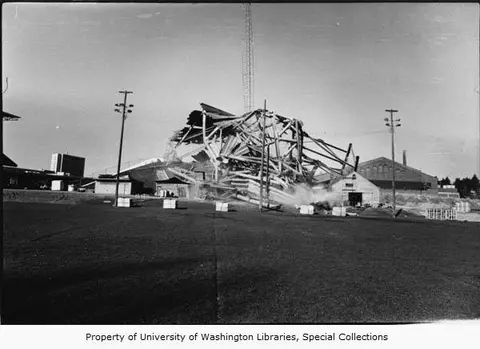
The initial estimate of the financial loss was between $500,000 and $1,000,000. Blame for the collapse flew in all directions. But athletic director Mike Lude, who had been alerted to the calamity with enough time to watch the steel fall, assured that the project would get back on track and finish in time for the 1987 season. Nonetheless, the county assured the Huskies that the Kingdome would be available if needed.
Things did indeed move forward swiftly. By March 10, the contractors were given the go-ahead to remove the rubble. From there, with some changes made to the various firms doing the work and despite some relatively minor labor squabbles, the new upper deck and its 13,500 seats were ready, just in time for the start of the 1987 season.
September 5, 1987 – Washington 31, Stanford 21
Despite the considerable setback of the February collapse, the new deck was completed in time for the Huskies' debut vs. Stanford. The Huskies had gone 8-3-1 and lost to Alabama in the Sun Bowl the previous season and opened the 1987 campaign ranked No. 13 in the nation.
Over the course of the days and weeks before the game, work continued as railings and paint were finalized. As it happened, some of that was still temporary when Sept. 5 rolled around. The Sunday before the game, the Seattle Times ran a story under the headline: "Is It Safe? UW, Builders Say Yes."
"The paint may still be wet, the guard rails temporary, and the landscaping shoddy," reporter Tom Farrey wrote. "But come Saturday, the new roof at Husky Stadium definitely – repeat, definitely – will be safe to watch a football game under. So says Al Tarr, who is in charge of the project.
"'I've heard the (fears),'' said Tarr, the assistant vice president for facilities management at the University of Washington. "But this is an extraordinarily safe structure. If there were any safety concerns, the city and the university wouldn't let us play a game there.''
Farrey's story also noted that the city had yet to sign off on the final inspection and that the Kingdome was still available if needed. Obviously, it wasn't.
The following Sunday's Times carried a story from reporter Rebecca Perl which opened:
"Two hours before the first kickoff of the season in what is now the Northwest's largest stadium, Rachel Livingston and Kim Gaetz, ushers, were eyeing the new north addition of Husky Stadium.
"'I've thought of the possibility of it falling,' Livingston said. 'I don't think they would stick all those contributors up here if they thought it might fall,' said Gaetz.
"The new north stands didn't fall. They shook, though, when the fans stamped their feet as the
Huskies rolled to a 31-21 victory yesterday over the Stanford Cardinal. But despite a lot of jokes about the addition falling, as its first steel skeleton did in February, no one seemed truly afraid."
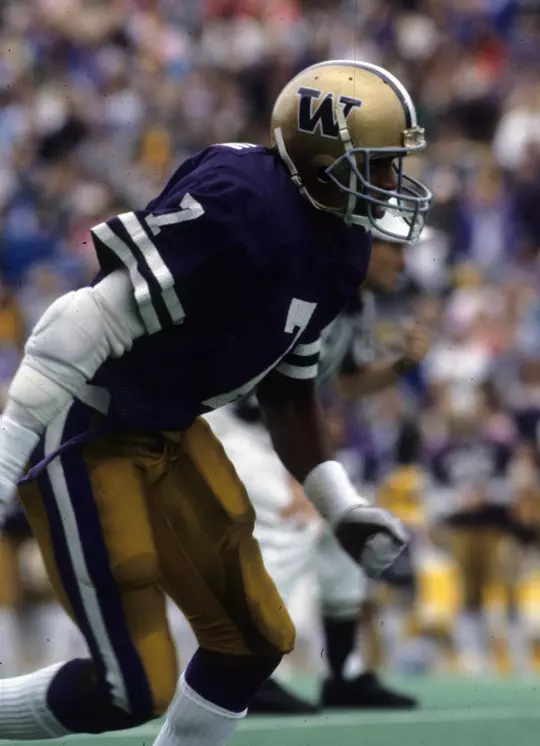
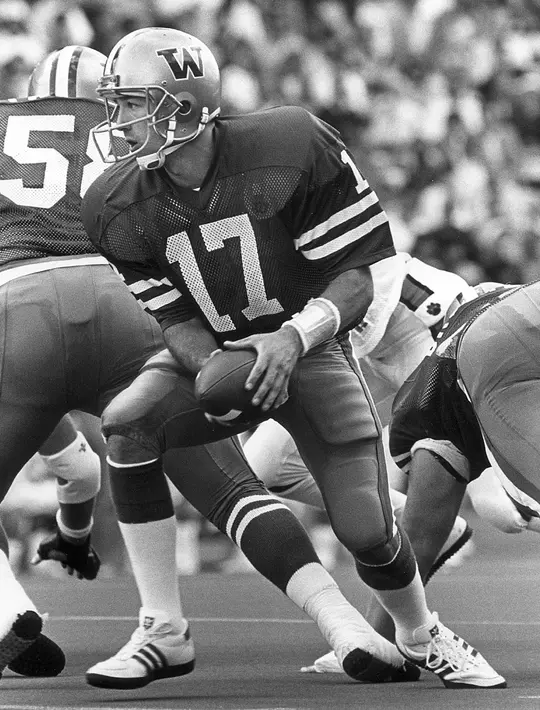
There were some minor hiccups – the air conditioning didn't work in the new Tyee Center (now the Don James Center), and some of the water fountains weren't in operation – but all in all, the new-look stadium was a success. Even the extra traffic brought on by the addition of 13,500 fans wasn't as bad as expected. Official attendance was 73,676.
On the field, the Huskies were led by early-season Heisman Trophy candidate Chris Chandler and receiver Darryl Franklin. Chandler went 18-for-31 for 314 yards while Franklin had a career day of his own, catching eight passes for 209 yards (second-most in UW history at the time) and a score.
Fullbacks Aaron Jenkins and Tony Covington also scored touchdown for the Huskies, and Brandy Brownlee added three field goals.
Along with the new stadium addition, much of the coverage in the sports sections of that centered on Brian Bosworth, whom the Seahawks had selected in the NFL's supplemental draft. The Boz, whose debut was probably as highly anticipated as any football player in Pacific Northwest history, would begin his pro career in the Seahawks regular-season opener a week after the Huskies' opened the season vs. the Cardinal.
As for the Huskies, the 1987 season would probably be considered something of a disappointment as the UW's seven wins (7-4-1) equaled the fewest since 1976. Washington finished third in the conference with a 4-3-1 record and beat Tulane in the Independence Bowl, in Shreveport, La.
Franklin, who was drafted by the Rams in the eighth round of the following spring's draft but didn't play in the NFL, went into his family business and now owns a roofing company in the Tacoma area, where he grew up.
Chandler was the Indianapolis Colts' third-round draft pick in 1988. He went on to play a total of 17 years in the NFL, for eight different teams. In 1998, he led the Atlanta Falcons to a 14-2 regular-season record and a trip to the Super Bowl, where Atlanta lost to John Elway and the Broncos. Elways' father, Jack, was the Stanford head coach in 1987. Since retiring, Chandler has resided mainly in the San Diego area.