
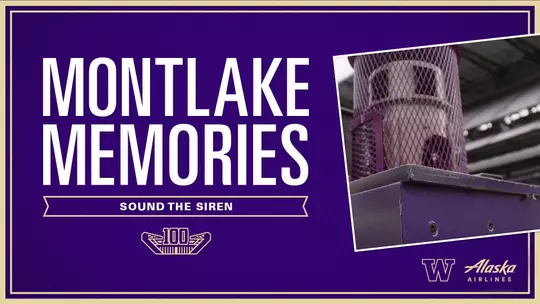
Montlake Memories: Sound the Siren
Husky Stadium Centennial Celebration
Jeff Bechthold
11/14/2020

As we look back at the 100th anniversary of the opening of Husky Stadium, we have recalled many of the great moments and memories that have been written at the Greatest Setting in College Football.
Most of those great moments have had to do with on-the field success for the Huskies. And as anyone who has attended a game at Husky Stadium well knows, success on the field is usually accompanied by one sound – the wailing of the siren situated in the west end zone, in front of the Husky Marching Band.
The cry of that old, air-raid siren is usually accompanied by the roar of the crowd and is as deeply implanted with our memories of so many great moments as the visuals. When fans recall in their minds' eyes Mason Foster celebrating his famous "immaculate" interception vs. Arizona after having sprinted to the east end zone, they can hear it. It's the same for those who were there to see Fred Small fall on a ball in the end zone to beat USC in 1981, and for all who watched Cody Pickett connect with Corey Williams in the northwest corner of the field to beat Washington State in 2003. It is a part of that place and all of those memories.
For something so important and so dear to the entire UW football community, details of the history of the Husky Siren are scant.
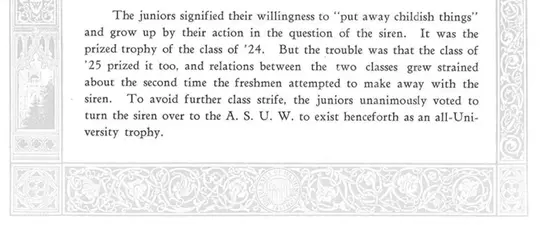
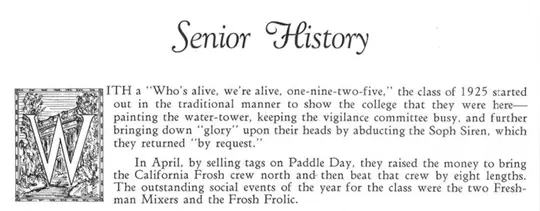
The association between the UW and a siren seems to date back to the Class of 1924, which adopted a long, metal siren as a sort of symbol of the class. In those days, there were numerous competitions and rivalries between classes, and the siren itself became a coveted item.
As the 1924 Tyee Yearbook explained, on a page detailing the senior class' experiences:
"The class of 1924 started their memorable career by introducing what was later to be known as the "Soph Siren." It was used at the games, and to call the class meetings together.
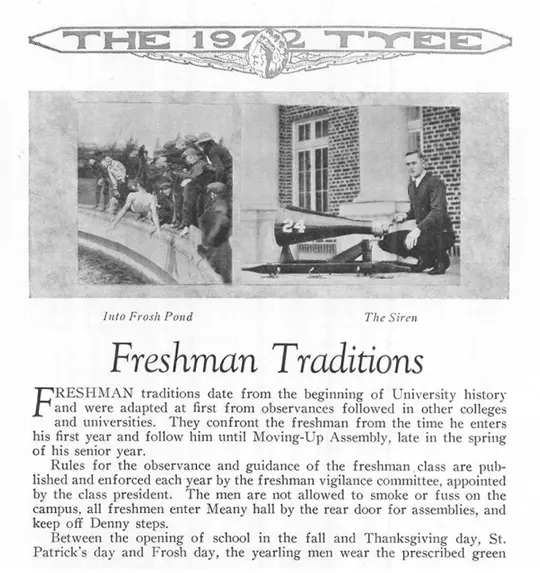
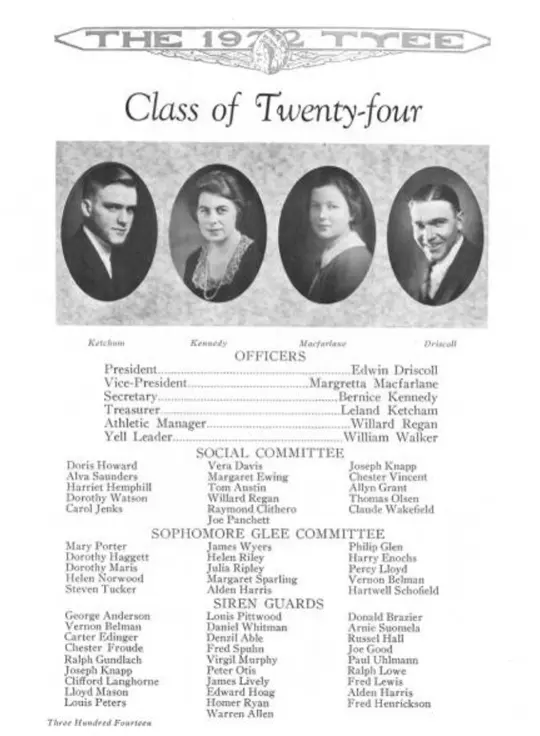
"It was also during the Sophomore year that the Siren was abducted by members of the Freshman class. When it was returned, the Sophomores decided to turn it over to the A.S.U.W. as a Washington trophy."
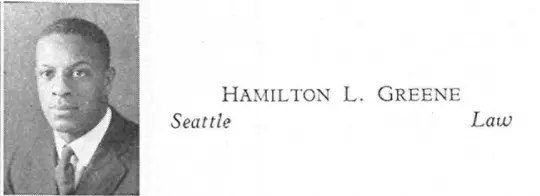
Among the members of that class of students was Hamilton "Ham" Greene, a law student from Seattle who was the first Black football player in UW history. Another of his classmates was Morgan Padelford, son of Frederick Morgan Padelford, who worked as a professor at the UW for 41 years, eventually serving as dean of the graduate school, and after whom Padelford Hall is named.
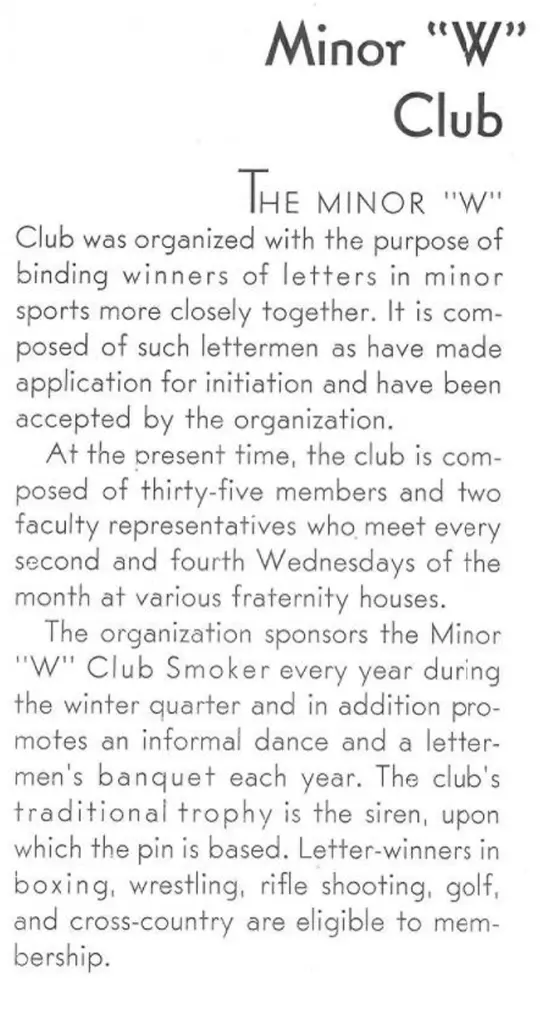
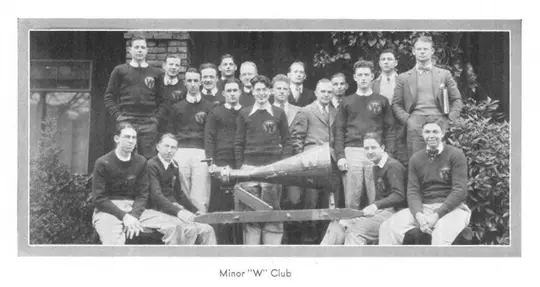
After that class graduated, the siren appears to have been taken over by the "Minor W Club," a group of those who participated in "minor" sports (to use the term of that era), like golf, rifle, wrestling and cross country. There are references to that club holding the siren as its trophy well into the 1940s.
From there, mentions of a siren in the old Tyee yearbooks disappears. The story picks up in the early 1970s, when the siren's wail was reintroduced to Husky Stadium.
In a 2013 column in the Kitsap Sun newspaper, columnist Chuck Stark detailed the story of how the current UW siren, which is sounded after each UW score at Husky Stadium, came to find its way from Bremerton to Seattle. It started with longtime former Husky Marching Band Director, the late Bill Bissell. Stark explains:
"The siren is probably 70-plus years old, but it didn't make its debut at Husky Stadium until the early 1970s.
"At least, that's the word from Bruce Bissell, the band director's son. His dad, who died in 2001 at the age of 70, was an assistant director of the UW marching band in the late 1960s and was the head guy from 1970-1993.
"The Bissells lived on Madrona Drive, which looked across Ostrich Bay [Bremerton, Wash.]. That's when his dad, who was Mr. Music at West High from 1956 to 1970, used to hear the air-raid siren going off. Turns out some West High students ended up with it after exploring the old buildings at NAD Park.
"'The siren was sitting on top of one of the buildings we used to go play in as kids,' Bruce Bissell said. 'They snuck in, unbolted it and took it home. Then they figured out how to make it work and set it off.
""You could hear it all over the place and Dad thought that would really be cool after touchdowns at Husky Stadium.'
"So Bissell made a deal with the teenagers who stole the siren. He joked that he would turn them into authorities, then bought them off with free tickets to a Husky game.
"The siren has been property of the band since Bissell hauled it over on the ferry after getting approval from then-athletic director Mike Lude to let it wail.
"The younger Bissell said the popularity of the siren coincided with the rise of the Husky program under Don James in the mid-1970s. By the time the Huskies started going to Rose Bowls, the siren could raise the hair on the arms of die-hard UW fans.
"'It's an electric siren and my dad told me the guys in the band were pretty resourceful and figured out they could wire up a car battery and put a light switch on it,' said Bruce Bissell. 'So back in the day it was a matter of taking the wires off the siren and putting them on a car battery to power it up. The next generation wired-up some kind of switch. It was mounted on a piece of plywood and they'd set it down on the track and fire it up.'"
Nowadays, the siren is stored at Husky Stadium and brought out each game, attended to by a specific group of band members – the Siren Team – who have the honor of maintaining it and sounding it at the appropriate time.
Today, just as it did 50 years ago, the siren still manages to raise the hair of Husky fans as its close, aural association with UW football success is now deeply ingrained.
The University of Washington Huskies have many traditions that surround its football program. However few are as beloved or have been a part of the Husky game day tradition as long as Husky Stadium’s vintage WWII air raid siren. Originally obtained by former Husky Band director, Bill Bissell, from the Puget Sound Naval Shipyard, the siren has been sounded by a member of the Marching Band after every Husky score since the 1974 season.Dr. Brad McDavid, Director of Athletic Bands